


Trusted Diamond Jewellers: How to Find One in London
Last Updated: November 1, 2026
Quick Summary
A trusted diamond jeweller is a business that can prove where a stone came from, show independent certification, and service the ring long after the sale. In London, verify the GIA report number yourself, ask who sets the stone, and get aftercare terms in writing before you pay.
- Ask whether the stone is set in an in-house workshop or outsourced, and who controls quality checks.
- Check the company's registration on Companies House to confirm its trading history matches its story.
- Demand an independent certificate and verify the report number matches the laser inscription on the girdle.
- Get lifetime guarantee exclusions and aftercare terms in writing before paying.
- Marlows Diamonds offers a lifetime guarantee on cleaning, polishing and resizing, plus a 30-day return policy.
Table of Contents
- How to Choose a Diamond Jeweller You Can Actually Trust
- Diamond Ring Certification and Grading: What the Paperwork Must Show
- Natural vs Lab-Grown Diamonds: Which Suits Your Budget and Values
- Questions to Ask When Buying an Engagement Ring
- Aftercare, Guarantees and What Happens in Ten Years
- Book a Consultation With a Trusted Diamond Jeweller
- Frequently Asked Questions
How to Choose a Diamond Jeweller You Can Actually Trust
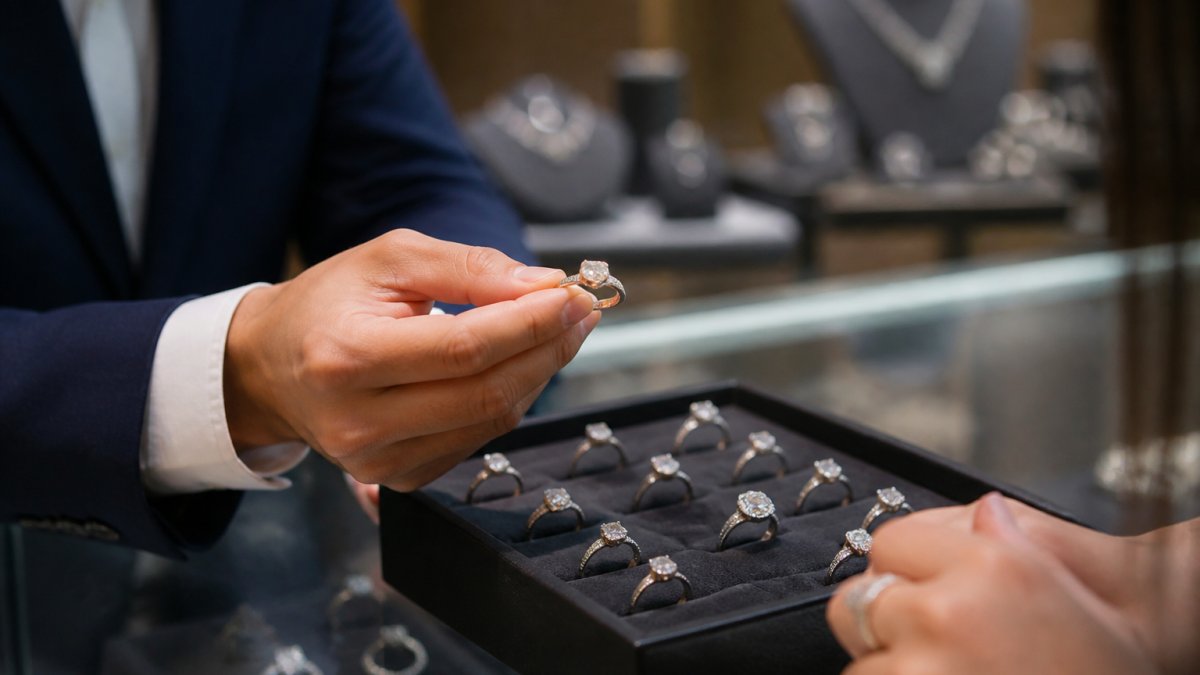
Buying a diamond is one of the largest single purchases most people make, and the difference between a good and bad experience usually comes down to the jeweller, not the stone. Finding a trusted diamond jeweller in London means looking past the shopfront and asking hard questions about certification, workshop practice and aftercare. At Marlows Diamonds, a fourth-generation family business established in 1951, we know the questions buyers ask before they commit.
A trusted diamond jeweller is a business that can prove where a stone came from, show independent certification, and service the ring long after the sale. For the foundational knowledge to judge a jeweller's expertise, read our complete guide to buying an engagement ring online. Those three things matter more than any discount.
Below, we break down what separates a jeweller worth your money from one worth walking away from. First, though, here is a summary of the checks that matter most:
| What to check | Why it matters | Where to verify |
|---|---|---|
| Independent certification | Confirms the stone is what it claims to be | GIA report number |
| Workshop location | Shows who actually sets the stone | Ask directly |
| Family history and trading record | Signals stability for future servicing | Companies House, shop records |
| Aftercare terms in writing | Prevents surprise bills later | Written guarantee |
| Return policy | Protects you if the ring is wrong | Terms at point of sale |
Track Record and Family History
A jeweller's history can be a useful indicator of stability. A business that has traded for several decades is more likely to be around when your ring needs resizing in ten years. Ask how long the family or ownership has been in the trade, and check the company's registration on Companies House to confirm the trading history matches the story.
We are the fourth generation of our family to run the business. If you want to understand why more people trust Marlows certificated diamonds, the short version is that paperwork and longevity go hand in hand.
In-House Workshops vs Outsourced Setting
A useful question to ask any jeweller is who sets the stone. A jeweller with an in-house workshop controls the setting, the finishing and the quality checks, whereas outsourced work can leave less control over the outcome.
In practice, this means you should ask to see the workshop or at least understand the process. A common mistake is assuming every jeweller makes what it sells. Many do not.
Diamond Ring Certification and Grading: What the Paperwork Must Show
A diamond certificate is an independent report describing a stone's carat weight, colour, clarity and cut (gia.edu). It is not a valuation and it is not a guarantee, but it is the single most useful document you will receive. A diamond grading report is issued by a laboratory that has examined the stone under controlled conditions, and the report number should match the number laser-inscribed on the diamond's girdle.
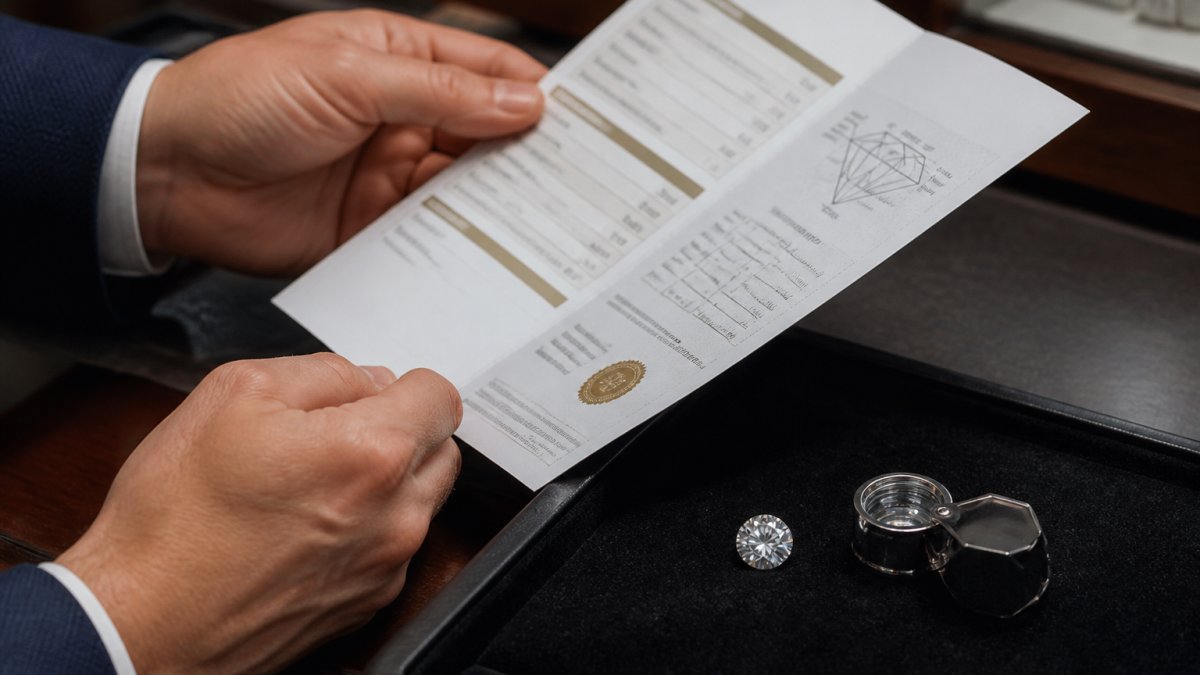
Demand a report from a recognised laboratory and verify the number yourself before paying. If a jeweller cannot produce one, treat that as a warning. For a fuller explanation of why diamonds have to be certified, our own guide walks through exactly what each line on the report means.
Natural vs Lab-Grown Diamonds: Which Suits Your Budget and Values
Natural and lab-grown diamonds are chemically identical; the difference is origin and rarity (More Info About Laboratory-Grown Diamonds | Gemological Institute of America). Natural stones formed underground over billions of years, while lab-grown stones are created in weeks. Both can be certified to the same standards.
Which one suits you depends on what you value. If rarity and resale tradition matter, natural is the conventional choice. If you want more size and quality for the same budget, lab-grown delivers that. Neither is "fake", and any jeweller who tells you otherwise is selling fear rather than facts.
Questions to Ask When Buying an Engagement Ring
The right questions protect your money. Ask these before you commit:
- Can I see the independent certificate and verify the number?
- Is the setting done in-house, and what is the turnaround?
- What exactly does the lifetime guarantee cover, and what costs extra?
- What is the return window, and in what condition must the ring be?
- Can I see the stone under a loupe before it is set?
- Who services the ring in five or ten years, and at what cost?
- Can I meet the person who will actually make the piece?
If you want a head start on how to choose diamond rings for a proposal, our guide covers the practical decisions in order. A jeweller who welcomes these questions is a jeweller worth trusting.
Aftercare, Guarantees and What Happens in Ten Years
The sale is the start, not the end. A ring worn daily will need cleaning, checking and eventually resizing, and the jeweller who sold it should be the one doing that work. Ask for the aftercare terms in writing, including what is free and what is chargeable.
Watch out: check what a "lifetime guarantee" excludes before you buy. Get the exclusions in writing before you pay.
We offer a lifetime guarantee covering cleaning, polishing and resizing, plus a 30-day return policy. Choosing a jeweller with a workshop and a long trading record gives you a better chance that someone will still be there in a decade.
Book a Consultation With a Trusted Diamond Jeweller
Finding a trusted diamond jeweller in London is ultimately about verification, not charm. Check the certificate, ask who sets the stone, read the aftercare terms, and confirm the business has a history it can stand behind. Do that, and the decision becomes straightforward.
If you would rather start with a business that has been in the trade for over seventy years, browse our exclusive diamond jewellery collections or message us on WhatsApp to arrange a visit. Ask us to show you the stones, the certificates and the workshop, and put any question on this list to us before you decide.
The challenge with buying a diamond is that almost every jeweller claims to be trustworthy, and few can prove it. At Marlows Diamonds, we put the proof in front of you: GIA-certified stones, in-house workshops for same-day bespoke work, and a lifetime guarantee covering cleaning, polishing and resizing. Get started with Marlows Diamonds and buy your diamond with the paperwork, the workshop and the family history all in plain view.

FAQ's
Some of the most common Q&A's