


Why Diamond Ring Prices Vary: A Birmingham Buyer's Guide
Last Updated: November 7, 2026
Quick Summary
Diamond ring prices vary widely because the 4Cs, cut, colour, clarity and carat weight, each move the quote independently, and two stones that look identical to the eye can sit at very different points on the scale. The biggest single lever is natural versus lab grown origin, while shape, certification and setting costs also change what you pay.
- Price per carat climbs steeply with weight and jumps again at round-number thresholds.
- Round brilliant stones usually carry a higher per-carat quote than fancy shapes.
- A grading report is the only independent record of the 4Cs you are buying.
- Compare quotes with the same shape, carat, colour, clarity and laboratory.
- Itemise setting and metal separately so you never compare a solitaire against a halo.
Table of Contents
- The 4Cs: Why Two Similar-Looking Rings Can Cost Very Different Amounts
- 1 Carat Diamond Price Differences: Size Thresholds and Price Per Carat
- Natural vs Lab Grown Diamond Prices: What Changes and What Doesn't
- Diamond Shape Price Comparison: Why the Outline Changes the Quote
- Diamond Certification and Price: What a Grading Report Really Tells You
- How to Compare Diamond Ring Prices Fairly Before You Buy
- Frequently Asked Questions
The 4Cs: Why Two Similar-Looking Rings Can Cost Very Different Amounts
Diamond ring prices vary widely because the 4Cs, cut, colour, clarity and carat weight, each move the quote independently, and two stones that look identical to the eye can sit at very different points on the scale. At Marlows Diamonds, we have spent decades explaining this to couples who compare two rings and assume the difference is markup.
It rarely is.
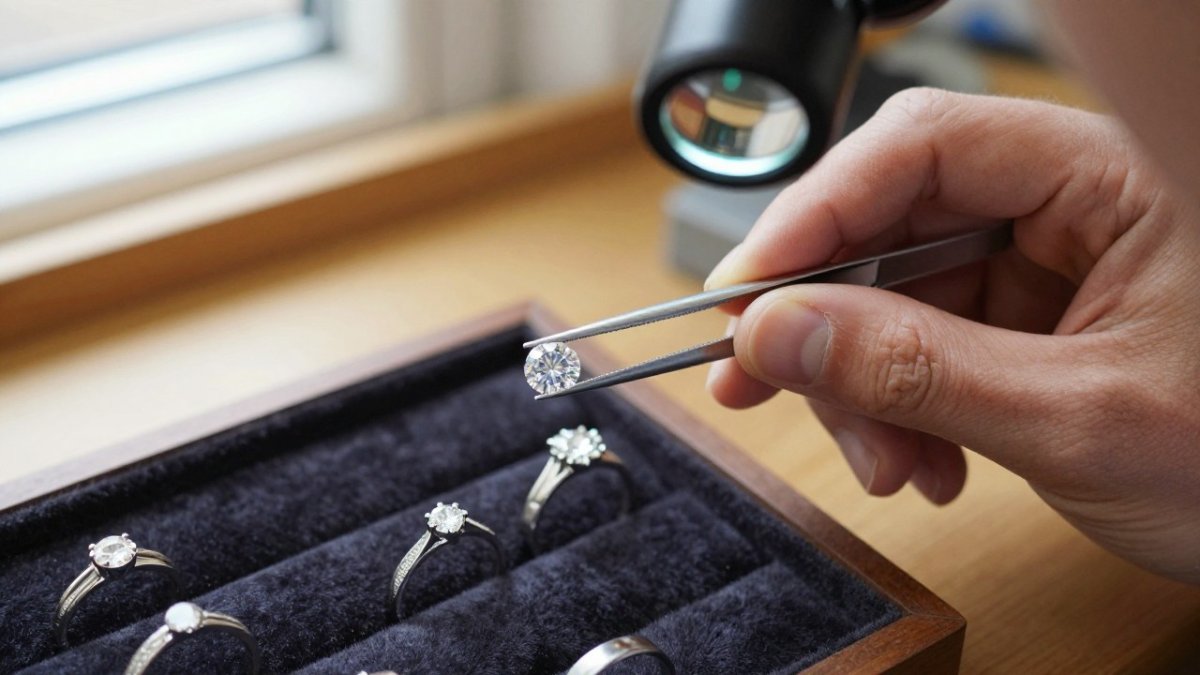
Cut, Colour and Clarity: Where the Money Goes
Cut is the only one of the 4Cs that is entirely down to human skill, and it is the first thing to interrogate when diamond ring prices diverge. A well-proportioned stone returns light through the table; a poorly proportioned one leaks it through the sides and looks dull even at a high colour grade.
Colour is graded on a letter scale from D, colourless, downwards (gia.edu). The practical point for buyers: the difference between neighbouring grades is often invisible once the stone is set in white metal, yet it changes the quote.
Clarity describes internal inclusions and surface blemishes. Most inclusions in the VS and SI ranges are invisible without magnification, which is why a trained eye matters more than a certificate number alone.
Pros of prioritising cut: better sparkle for the money. Cons: a top-cut stone in a lower colour grade requires you to trust the setting to mask warmth.
1 Carat Diamond Price Differences: Size Thresholds and Price Per Carat
The 1 carat diamond price is not a simple multiple of a half-carat stone. Price per carat climbs steeply as weight increases, and it jumps again at round-number thresholds because demand concentrates there. A stone at 0.99 carat and one at 1.00 carat can look the same in the hand while carrying noticeably different quotes.
Watch out: shopping to an exact threshold is where buyers most often overpay. If the ring design has a halo or bezel, a slightly lighter centre stone can face up identically.
- Price per carat rises with weight, not in a straight line
- Popular thresholds carry a demand premium
- Spread and depth affect how large the stone actually faces up
- A lighter stone with excellent proportions can outperform a heavier, poorly cut one
Natural vs Lab Grown Diamond Prices: What Changes and What Doesn't
Natural vs lab grown diamond prices is the single biggest lever on a quote today. Lab-grown stones are produced in a laboratory, and their cost differs from that of natural stones of comparable specification.
What does not change: the 4Cs still govern quality, independent grading still applies, and the setting and metal costs stay the same either way. What does change is resale expectation. Natural diamonds have a long-established secondary market; lab-grown stones are a newer category and trade differently secondhand.
If you want to see both side by side with certification stated, browse our emerald cut engagement rings UK collection.
Best for: buyers who want maximum size and sparkle within budget. Skip if: long-term resale value is your priority.
Diamond Shape Price Comparison: Why the Outline Changes the Quote
Diamond shape price comparison comes down to rough retention and demand. A round brilliant is engineered to maximise light return, but it discards more of the original rough than most fancy shapes, so round stones command a premium per carat.
Shape also influences how much of the rough crystal is retained, which affects manufacturing cost and therefore the price per carat.
Shape also changes the buying criteria, and that is where like-for-like comparison gets slippery.
When you compare shapes, hold the 4Cs constant and ask three questions: does the grading report state proportions and finish grades, is the shape's known weak point (bow-tie, point symmetry, step pattern) addressed in the video or in-person viewing, and does the quote itemise the setting separately so you are not comparing a solitaire against a halo. A round stone at a given grade will usually carry a higher per-carat quote than an oval at the same grade, but the oval may face up larger for its weight, which changes the value equation.
You can see how shape translates in practice by viewing our pear shaped diamond rings and our round shaped cut diamond ranges.
Diamond Certification and Price: What a Grading Report Really Tells You
Diamond certification and price are linked because a grading report is the only independent record of what you are buying. A report from a recognised laboratory records the 4Cs as independently assessed, not as described by the seller.
Differences between laboratories matter more than most buyers realise.
Report detail also varies. A full grading report typically includes measurements, proportions, finish grades, fluorescence and a plotting diagram of inclusions; a shorter report may omit some of these. When you compare quotes, check that both stones have the same depth of reporting.
Gemological Institute of America report check
Ask to see the report number and check it against the laboratory's own database before you commit. If a seller cannot produce a verifiable report, treat the grade as unconfirmed.
Our round cut diamond ring collection lists GIA-certified stones, so you can verify each one independently. When you visit, ask to see the report alongside the stone; the certificate tells you what was measured.
How to Compare Diamond Ring Prices Fairly Before You Buy
Comparing diamond ring prices fairly means holding every variable constant except the one you are testing. Most quotes that look cheaper are simply quoting a different specification.
Use this checklist before you compare two quotes:
- Same shape and carat weight, within 0.05 carat
- Same colour and clarity grades, from the same laboratory
- Cut grade stated, not assumed
- Metal type and gram weight confirmed
- Setting style and accent stones itemised separately
- Certification and report number included
- Aftercare, resizing and returns stated in writing
A common mistake is comparing a halo ring against a solitaire and concluding one jeweller is cheaper. The halo carries accent stones and extra metal; it is a different product.
If you want a further benchmark, our diamond eternity rings for her sit in the same certified category and give you another reference point for like-for-like quotes. Buyers who prefer to compare stones in person can get in touch with us to arrange a visit.
| Factor | What It Changes | Buyer Impact |
|---|---|---|
| Cut grade | Light return and sparkle | Biggest visual difference per pound |
| Colour grade | Whiteness of the stone | Small visible change, larger quote change |
| Clarity grade | Inclusions under magnification | Often invisible once set |
| Carat weight | Size and price per carat | Steep rises at thresholds |
| Shape | Rough retention and waste | Fancy shapes often cost less per carat |
| Origin | Natural or lab-grown | Largest single price lever |
| Certification | Independent verification | Protects the grade you paid for |
| Setting and metal | Design and materials | Itemise separately when comparing |
That is how diamond ring prices vary widely, and why a like-for-like comparison beats a headline figure every time. We would rather you arrived with a checklist than a hunch.
Comparing quotes across different specifications is the fastest way to overpay.

FAQ's
Some of the most common Q&A's