



How to Choose a Wedding Band Width for Small Hands
Last Updated: November 24, 2026
Quick Summary
Choose a band width of 1.5mm to 2.5mm for small hands. A narrow band keeps the ring in proportion with slender fingers and short hands, so the metal flatters the hand rather than swamping it. Wider bands of 3mm and above suit longer fingers and larger hands better.
- A 2mm to 2.5mm band works best for small fingers, reading as delicate and leaving room to bend.
- If you want diamonds in the band, treat 2mm as a safer floor than 1.5mm.
- For a wider band of 3mm and above, you may need to go up half a size for comfort.
- Keep the wedding band the same width or slightly narrower than the engagement ring.
- Add up the widths of stacked rings, since two 2mm bands cover the same 4mm of finger as one 4mm band.
Table of Contents
- How Do You Choose a Wedding Band Width for Small Hands?
- Why Proportion Matters More Than Size
- The Three Widths to Compare
- Wedding Band Width for Small Fingers: What Works Best
- Narrow vs Wide Wedding Bands: Weighing Comfort and Style
- How to Measure Ring Size at Home UK: A Step-by-Step Guide
- Pairing a Wedding Band with an Engagement Ring
- Book a Birmingham Fitting at Marlows Diamonds
- Frequently Asked Questions
How Do You Choose a Wedding Band Width for Small Hands?
Choose a band width of 1.5mm to 2.5mm for small hands. A narrow band keeps the ring in proportion with slender fingers and short hands, so the metal flatters the hand rather than swamping it. Wider bands of 3mm and above suit longer fingers and larger hands better.
This guide from Marlows Diamonds covers the practical side of that choice. We are a fourth-generation family jeweller, established in 1951. Below, we will show you exactly how to pick a width that looks right, feels comfortable, and sits neatly next to an engagement ring.
But first, here is what most guides get wrong. They talk about band width as if it were a style choice alone. It is not. Width changes how a ring fits, how it wears, and how the whole hand looks.
Why Proportion Matters More Than Size
Band width is the measurement of the metal across the top of the ring, from one edge to the other. That number decides the visual weight of the ring on your hand.
A 4mm band on a large hand looks delicate. The same 4mm band on a small hand looks heavy. The metal has not changed. The proportion has.
So the question is never "what is the best width?" It is "what width suits this hand?" Three things drive the answer:
- Finger length: short fingers need less metal across them
- Finger width: slender fingers suit narrow bands
- Hand size: a small hand carries a lighter look better
Get this right and the ring looks made for you. Get it wrong and even a beautiful band can feel clumsy.
The Three Widths to Compare
Wedding bands for smaller hands fall into three groups. Compare them side by side before you decide.
| Width | Look | Best For | Watch Out For |
|---|---|---|---|
| 1.5mm - 2mm | Delicate, fine | Very slender or short fingers | Can feel fragile over years of wear |
| 2.5mm - 3mm | Balanced, classic | Most small hands | Sits close to an engagement ring, so check the pairing |
| 4mm and above | Bold, statement | Longer fingers, larger hands | Can overwhelm a small hand |
The middle range suits most people with small hands. It gives you enough metal to hold diamonds securely without crowding the finger.
If you want to see real examples, browse our collection of women's diamond set wedding rings to compare widths in person and on screen.
Wedding Band Width for Small Fingers: What Works Best
A 2mm to 2.5mm band works best for small fingers. It reads as delicate, leaves room for the finger to bend, and keeps the hand looking elegant rather than crowded.
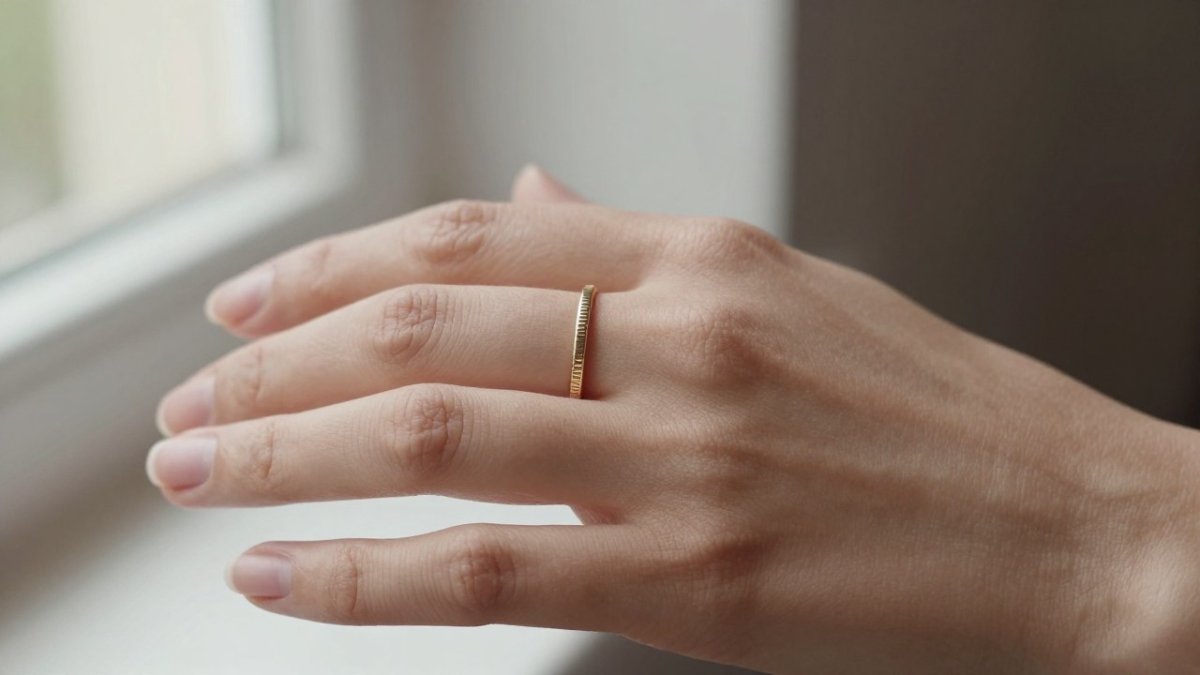
A common mistake is going too thin. A 1.5mm band looks lovely in a photo, but it bends more easily and offers less metal for setting stones. If you want diamonds in the band, 2mm is a safer floor.
Short fingers need one extra rule. Keep the band narrow and the stones small. A wide band with large stones shortens the finger visually.
Narrow vs Wide Wedding Bands: Weighing Comfort and Style
Narrow bands win on comfort for small hands. Less metal means less surface pressing against the neighbouring fingers, and the hand bends more freely.
Wide bands bring presence. A 4mm band with a row of diamonds makes a clear statement. On a small hand, though, that statement can tip into heaviness.
Here is how we would weigh it:
- Everyday wear: a narrow band is easier to live with, especially if you wear it all day
- Style: a wider band gives more room for diamond settings and engraving
- Stacking: narrow bands layer better with other rings
- Longevity: wider bands hold their shape better over decades
Our honest view: for small hands, comfort should win. You wear this ring every day for the rest of your life.
How to Measure Ring Size at Home UK: A Step-by-Step Guide
Measuring your ring size at home is a useful starting point, but for small hands and varying band widths, it is only half the story. A wider band can feel tighter than a narrow one of the same circumference because it covers more of the finger and restricts movement. So before you rely on a home measurement, understand that width changes fit.
To measure your finger circumference at home, use a strip of paper and a ruler. Wrap it around the base of your finger, mark where it meets, and measure the length in millimetres. Follow these steps:
- Cut a strip of paper about 10cm long and 1cm wide.
- Wrap it around the base of the finger, snug but not tight.
- Mark the point where the paper overlaps.
- Lay it flat and measure the length in millimetres.
- Compare that figure against a ring size chart.
- Measure again in the evening, when fingers are at their largest.
- Check a second finger too, since hands are rarely identical.
Two things to watch out for. Cold hands measure smaller, so avoid measuring first thing in the morning or after being outside. And if your measurement lands between two sizes, go up, because a band that is too tight is harder to fix than one that is slightly loose.
But here is the small-hand caveat: a home measurement gives you a circumference, not a fit. For a narrow band (1.5mm-2.5mm), your usual size is likely fine. For a wider band (3mm and above), you may need to go up half a size to maintain comfort. This is why a professional fitting is recommended, especially when choosing a width for a small hand. Our ring size guide can help you cross-check, but nothing replaces trying on different widths in person.
Pairing a Wedding Band with an Engagement Ring
A wedding band should sit flush against your engagement ring, and width is the main factor that decides whether it does. But for small hands, the pairing is not just about fit, it is about proportion.
If your engagement ring has a twist or shaped band, a straight wedding band will leave a gap. A shaped band follows the curve and closes it. You can see the effect in our twist-shaped women's diamond wedding ring, which is cut to sit alongside a shaped engagement ring.
For small hands, the pairing rule is simple:
- Keep the wedding band the same width or slightly narrower than the engagement ring.
- Match the metal so the two rings read as one set.
- Avoid stacking a wide band against a delicate engagement ring.
What most guides miss is total width. Two narrow bands stacked together can equal one wide band on the finger. Add up the widths before you commit. For example, a 2mm engagement ring and a 2mm wedding band together cover 4mm of finger, the same as a single 4mm band.
Also consider the profile: a low-profile engagement ring may allow a wider wedding band to sit flush without rubbing, while a high-profile ring might accommodate a narrower band more comfortably. If you plan to wear both daily, try them on together to check for any spinning or discomfort.
Book a Birmingham Fitting at Marlows Diamonds
A fitting settles the question faster than any guide. You try widths on your own hand, next to your own engagement ring, and see what works.
Our showroom offers exactly that. Our in-house workshops allow for bespoke jewellery creation with same-day service, and our diamonds are GIA certified.
Before your visit, take a look at Marlow's exclusive diamond jewellery to see the collections we hold in store.
Choosing a wedding band width for small hands comes down to proportion, not preference alone. Get the width right and the ring feels like part of your hand from the first wear. At Marlows Diamonds, we fit bands in person, offer a lifetime guarantee that includes cleaning, polishing and resizing, and hold GIA-certified stones across more than 10,000 pieces. Get started with Marlows Diamonds and find a band width that suits your hand for good.

FAQ's
Some of the most common Q&A's