



How to Compare Bespoke Jewellery Craftsmanship
Last Updated: November 17, 2026
Quick Summary
The best way to compare bespoke jewellery craftsmanship is to examine the finished work itself, not just the showroom. Look up close at stone settings, polish inside the shank, hallmarks and how the piece fits and sits when rotated on the finger.
- Check that claws are neat, evenly spaced and secure, with no sharp edges.
- Inspect the polish inside the shank, where some makers take shortcuts.
- Look for a hallmark confirming the metal's purity and assay.
- Try the piece on, rotate it, and confirm it sits flat and balanced.
- Ask how long design and making will take, and what changes cost to make.
Table of Contents
- How to Choose a Bespoke Jeweller and Judge Their Workmanship
- Questions to Ask a Jeweller Before Buying an Engagement Ring
- Your Next Step: Book a Consultation and Check the Work in Person
- Frequently Asked Questions
How to Choose a Bespoke Jeweller and Judge Their Workmanship
Choosing a bespoke jeweller rewards patience. The best way to compare bespoke jewellery craftsmanship is to examine the work itself, not just the showroom. Ask to see finished pieces up close, then check settings, finishing and symmetry.
Look for clean stone setting. Claws should be neat, evenly spaced and secure, with no sharp edges catching on fabric. Check the polish inside the shank, where some makers take shortcuts. A hallmark confirms the metal's purity and assay, and the UK Assay Office hallmarking guidance explains what each mark means.
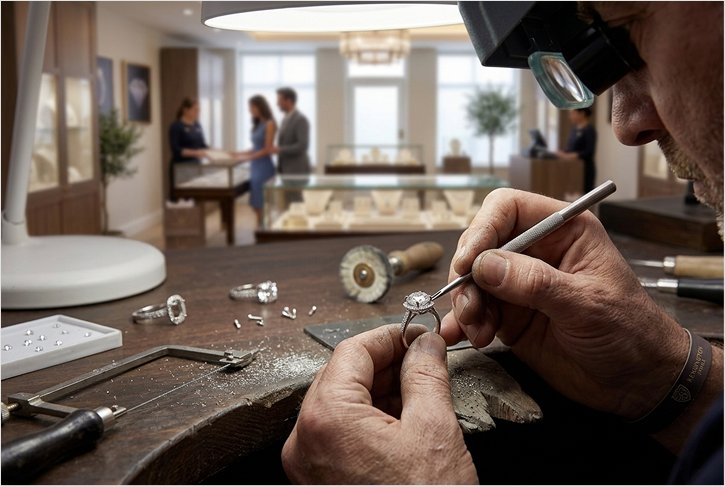
A useful test is fit and wearability. Try the piece on, rotate it, and check whether it sits flat and balanced.
Use this quick guide to compare the workmanship points the article covers.
| Check | What to look for | Why it matters |
|---|---|---|
| Stone setting | Neat, evenly spaced, secure claws | Prevents loose stones and snagging |
| Shank finish | Polish inside the band | Shows where shortcuts are taken |
| Hallmark | Metal purity and assay mark | Confirms the metal's purity and assay |
| Fit and balance | Sits flat when rotated on the finger | Shows wearability |
Questions to Ask a Jeweller Before Buying an Engagement Ring
A useful test is fit and wearability: try the piece on, rotate it, and check it sits flat and balanced.
Your Next Step: Book a Consultation and Check the Work in Person
Ask how long design and making will take, and what happens if you want changes. Lead times and revisions should be stated plainly.

FAQ's
Some of the most common Q&A's